Terraced and back-to-back houses
Cracks appearing along party walls or uneven floors in your Leeds terrace can signal more than age. These homes often sit on shallow foundations over reactive clay, and movement may involve your neighbour’s side too.
Movement that involves your neighbour’s wall too
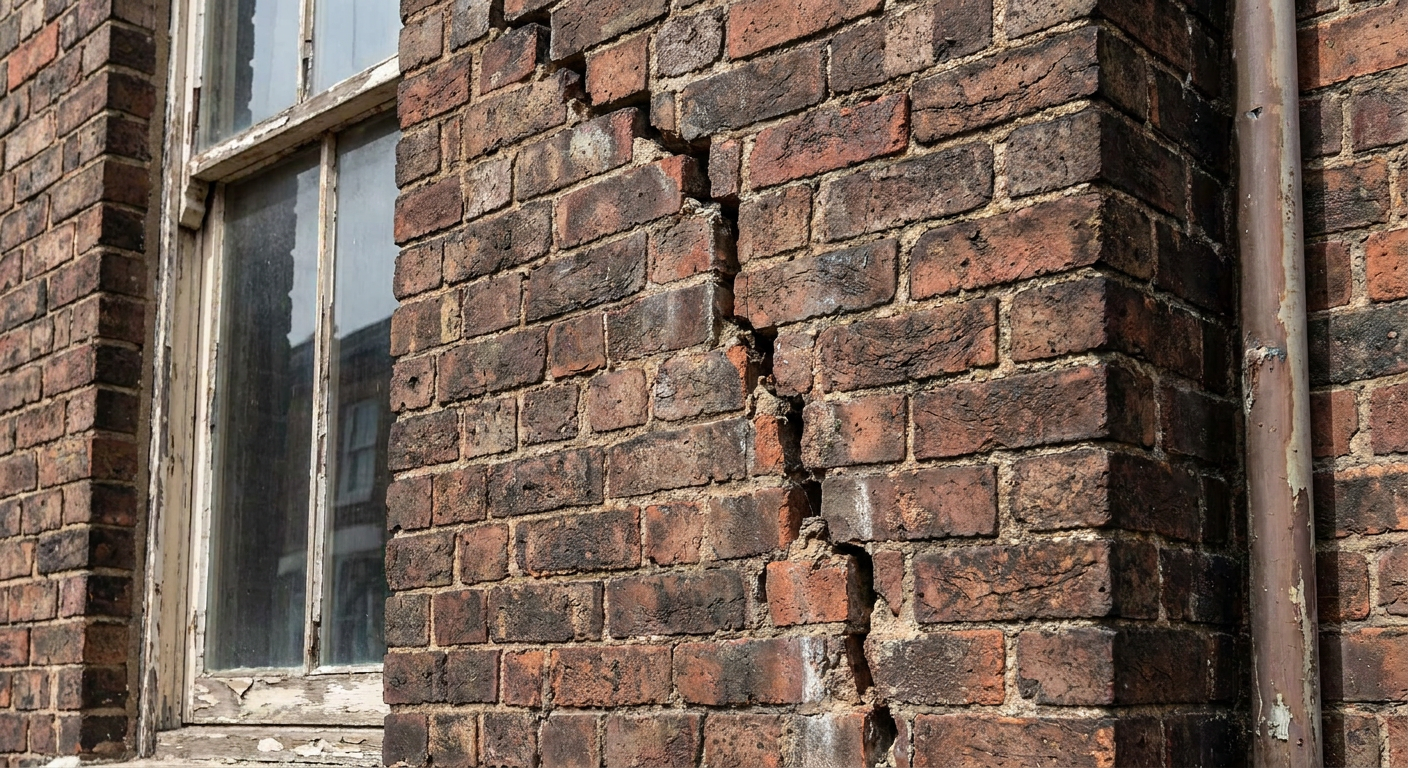
In Armley, Beeston, Batley and Headingley, many terraced and back-to-back houses share load-bearing party walls built before modern foundation standards. When the ground shifts, often because of clay shrinkage, leaking drains or nearby tree roots, the resulting movement rarely stays on one side. You might see fresh cracks where your ceiling meets a shared wall, doors sticking only on the ground floor, or external brickwork stepping diagonally near windows.
Because these properties are tied structurally to their neighbours, diagnosing the cause requires checking both sides. A specialist will look for tell-tale signs like crack width over 3mm, separation at window reveals, or seasonal opening and closing of gaps. What looks like minor settlement could be ongoing subsidence needing coordinated repair.
What you receive after an inspection
The specialist records findings clearly so you know what is happening beneath your home and whether it affects shared structure.
Clear written report
You get a factual account of observed movement, likely causes and whether it appears active or historic. The report notes if adjacent properties may be involved.
Insurance-ready documentation
If your buildings insurance covers subsidence, the specialist can supply a report you may choose to send to your insurer to support a claim.
Options explained plainly
Possible repairs, whether underpinning, resin injection or screw piling, are set out with their purpose, scope and why one suits your property better than another.

Signs specific to older terraces
These symptoms often appear first on shared walls or at junctions between old and newer extensions.
Diagonal cracks on party walls
Cracks running from window corners toward the ceiling or floor on a shared internal wall often indicate differential movement affecting both properties.
Sticking doors on ground floor only
If only downstairs doors bind in their frames while upstairs ones work fine, it can point to localised foundation drop typical of shallow footings.
External stepped cracking
Brickwork cracks that follow mortar lines in a stair-step pattern, especially near end walls, suggest soil movement beneath part of the terrace row.
Gaps around window frames
New daylight visible at the top or side of a window frame on a shared wall may show the structure is pulling away from its original position.
How it works from your side
You stay in control throughout; there is no obligation after speaking with the specialist.
Submit your details
You describe what you’ve seen and where your property is located. There is no charge for sending this enquiry.
Specialist contacts you
A local specialist covering your area, such as Armley, Beeston or Headingley, gets in touch to discuss the signs and arrange a visit if needed.
Site survey if required
The specialist inspects both internal and external walls, checks levels, and may monitor crack movement over time to confirm whether subsidence is active.
Clear next steps
You receive a straightforward explanation of findings and possible solutions, including whether Subsidence help, Underpinning, Concrete cracking repair, resin injection or screw piling applies to your case.
What people ask us about subsidence
Do I need my neighbour’s permission for an inspection?
Not for an initial visual survey of your own property. However, if repairs affect a shared wall, party wall agreements may be needed later, your specialist will advise if this applies.
Are back-to-back houses more prone to subsidence?
Many were built with very shallow foundations on clay-rich ground common around Leeds. That makes them more sensitive to soil moisture changes from trees or leaking drains than modern homes.
Will underpinning always be necessary?
No. If movement has stabilised or the cause is minor, monitoring or targeted resin injection may be sufficient. The specialist decides based on evidence, not assumption.
Can I claim on buildings insurance?
Most UK buildings policies cover subsidence, but check your wording and speak to your insurer early. The specialist can provide a report you may choose to submit with your claim.
What you have read here is general background on subsidence rather than guidance about your own building, and only an inspection can say what holds true at your address.
Get clarity on shared-wall movement
Send your details and a specialist covering your part of Leeds will contact you directly.