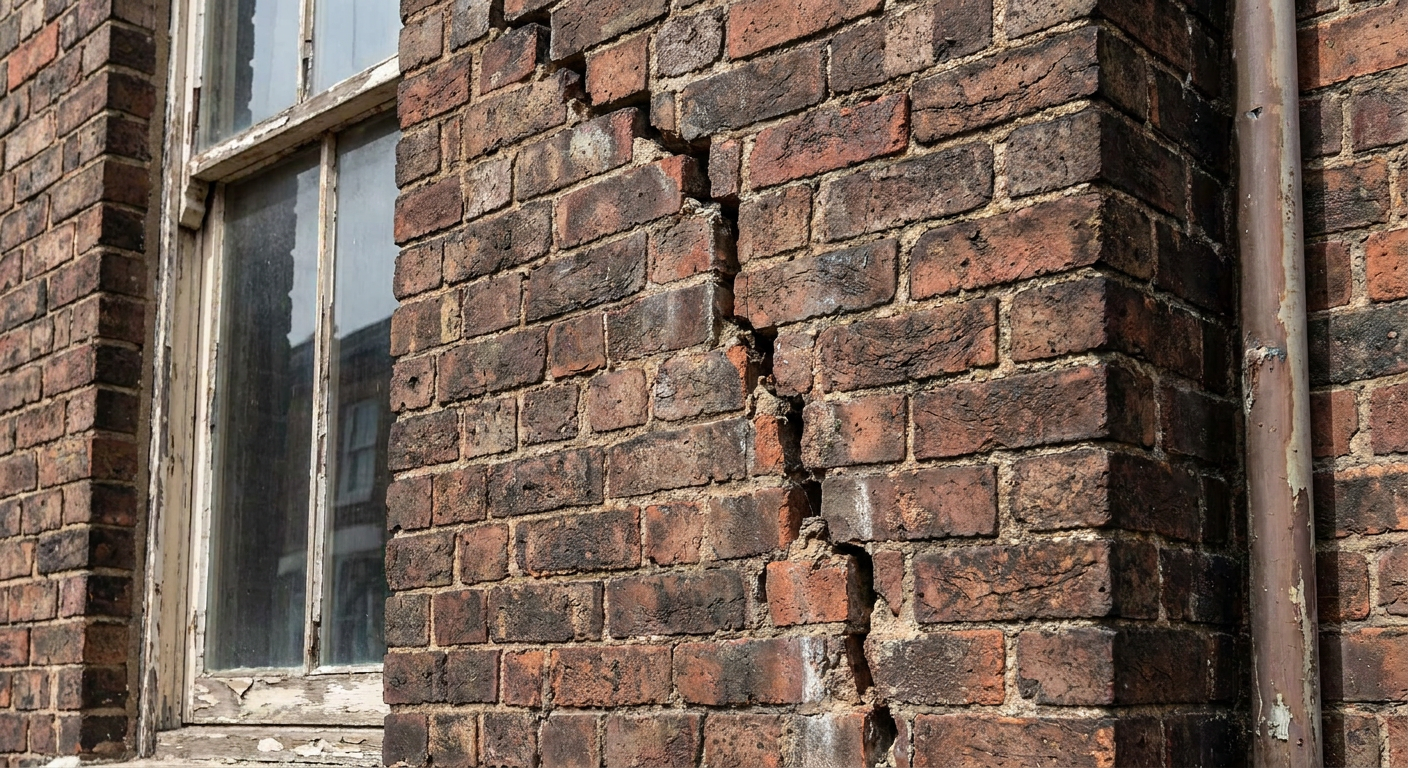
Is it subsidence or just an old crack?
Cracks appear in most homes over time, especially in older properties across Leeds and its surrounding towns. Not every crack signals serious movement, some are harmless, caused by drying plaster, seasonal shifts or minor settlement. Others follow patterns that suggest deeper issues with the ground beneath your home.
Not all cracks mean subsidence
Hairline cracks under 1mm wide, often near windows or corners, usually come from normal building movement or shrinkage in newer plaster. Diagonal cracks wider than 3mm, especially if they’re getting larger or appear on both sides of a wall, can indicate foundation movement. In areas like Chapel Allerton or Horsforth where clay soils dominate, seasonal drying and wetting cycles can cause repeated expansion and contraction that shows up as stepped cracks in brickwork.
What happens when you ask for help
A specialist will assess the property to determine whether the cracking is structural or cosmetic.
Initial inspection
The specialist examines crack location, width and direction, and checks for signs of recent movement such as fresh dust or misaligned doors.
Monitoring period
If the cause isn’t clear, they may install crack monitors for several months to see if movement continues.
Ground assessment
They evaluate soil type, nearby trees, and drainage, key factors in Leeds suburbs built on reactive clay.
Report and options
You receive a written summary of findings and possible next steps, which may include resin injection or underpinning if needed.
Insurance guidance
The report can be sent to your insurer if your policy covers subsidence-related damage.

What the specialist looks for on site
They start outside, tracing cracks through brickwork and noting whether they align vertically or step along mortar joints. Inside, they check floor levels with a spirit level and look for sticking windows or doors that no longer close properly.
In back-to-back houses common in Armley or Beeston, they pay close attention to shared walls and rear extensions, which often settle differently from the original structure. Drain mapping may follow if a leaking pipe is suspected of washing away supporting soil.
How the judgement is reached reliably
Specialists covering Leeds use consistent methods to distinguish between benign cracks and those needing repair. Their conclusions rest on physical evidence, not guesswork.
Measured crack widths
Cracks are recorded with digital callipers; anything over 5mm typically warrants further investigation.
Seasonal timing
Inspections note whether cracks open in summer and close in winter, a sign of clay shrinkage rather than progressive failure.
Photographic logs
Each crack is photographed with a scale reference so changes can be tracked over time.
Local knowledge
Before you get in touch
Can hairline cracks be ignored?
Usually yes, if they’re stable, under 1mm and not near structural openings. But if they widen or multiply, get them checked.
Do all diagonal cracks mean subsidence?
No. Diagonal cracks can also result from thermal movement, poor lintels or even heavy furniture pressing against a wall.
Will my buildings insurance cover this?
Many policies cover subsidence repairs, but not routine maintenance or cosmetic cracks. Check your policy wording or speak to your insurer directly.
How long does monitoring take?
Typically three to six months, to capture movement across seasons, especially important in Leeds’ variable climate.
Worth reading next
What we do
Advice
Subsidence and Your Buildings Insurance
What your buildings insurance may cover for subsidence in Leeds.
Trees, Clay Soils and Leaking Drains
What to check when your home moves near trees or old drains.
What Happens During a Subsidence Survey
What to expect when a specialist surveys your home for subsidence.
Underpinning or Resin Injection: How the Repair Is Chosen
How a specialist chooses the right repair for your home’s movement.
Advice and guides
They look for patterns, measure widths, check for ongoing movement and consider local ground conditions.
- Written findings: You get a clear report stating what was observed, what it likely means, and what (if anything) should be done next.
What you have read here is general background on subsidence rather than guidance about your own building, and only an inspection can say what holds true at your address.
Get a clear answer
Send your details and a specialist covering your part of Leeds will contact you to discuss what’s happening with your home.