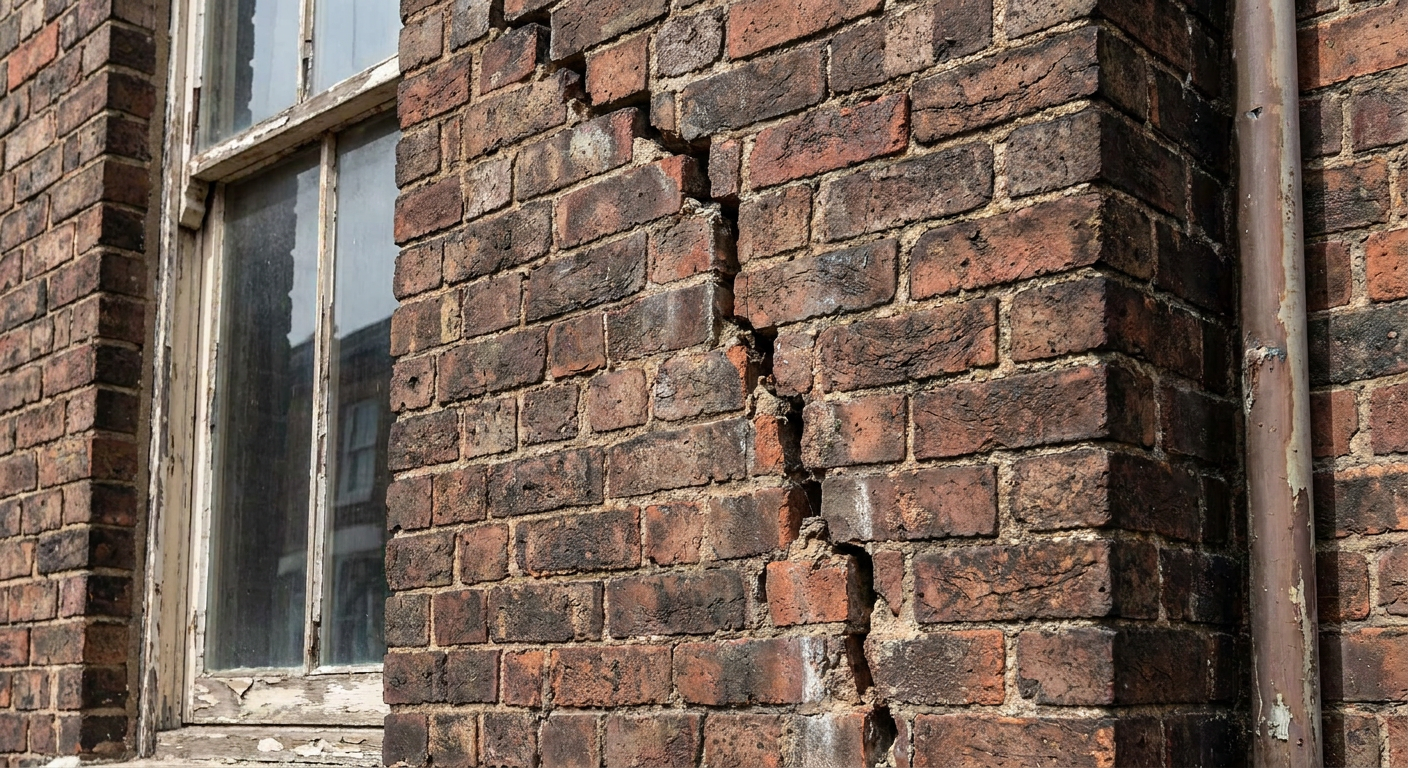
Resin injection for unstable ground
If parts of your floor have dropped, doors stick for no reason, or cracks keep reappearing after filling, the ground beneath may have softened or washed away. This is common where clay shrinks in dry spells or drains leak unnoticed. A specialist can determine whether injecting structural resin will stabilise the foundation without major excavation.
Movement that points to soft or voided ground
You might notice a step forming between rooms, tiles cracking without impact, or external brickwork pulling away at the corners. These signs often appear slowly but worsen after long dry periods or heavy rain. In older homes across Headingley, Roundhay or Morley, shallow foundations on variable ground are especially vulnerable.
Resin injection is one way to address this. It works by filling hidden voids and compacting loose soil with an expanding geopolymer, lifting slabs gently where needed. The specialist who takes your enquiry will assess whether your property’s structure, soil type and movement pattern make it a suitable candidate.
What you receive after the work
The outcome depends on what the specialist finds, but you are left with clear documentation and verified results.
Written report
A detailed record of the injection points, resin volumes used, and before-and-after levels, which you may choose to send to your insurer.
Stabilised foundation
The treated area should stop settling further, though seasonal movement in other parts of the house may continue if unrelated.
Minimal disruption
Unlike traditional underpinning, there’s no need to excavate deep trenches or prop internal walls, so most household routines can continue.
Independent assessment
The specialist decides whether resin injection suits your case or whether another approach such as screw piling or conventional underpinning would be more effective.

Signs resin injection might help
These indicators suggest localised ground loss rather than widespread foundation failure.
Sudden dip in floor
A noticeable slope over a small area, especially near an external wall, can signal washed-out soil beneath a slab.
Cracks near service entries
Hairline fractures clustering around drain runs or utility penetrations often point to localised erosion from leaking pipes.
Doors binding on one side
If a door sticks only at the top or bottom and hasn’t been planed recently, the frame may have shifted due to uneven support.
Gaps under skirting
Visible separation between skirting boards and the floor along one wall suggests the slab has dropped locally.
How it works from your side
The sequence begins with your enquiry and ends with a specialist’s recommendation based on physical evidence.
Submit your details
You describe the issue and location; we pass your enquiry to one specialist covering your part of Leeds or its surrounding towns.
Site inspection
The specialist visits to map cracks, take levels, and possibly carry out borehole sampling or ground-penetrating radar to locate voids.
Injection plan
If suitable, they mark drill points, usually through floor slabs or externally, and calculate resin quantities needed to fill and compact the affected zone.
Work completion
Small holes are drilled, resin injected under low pressure, and the surface reinstated. Monitoring may follow to confirm stability.
More on subsidence
What we do
About
Questions we hear in Leeds
Is resin injection covered by buildings insurance?
Some policies cover ground stabilisation if subsidence is confirmed as the cause. Check your policy wording or ask your insurer; the specialist can supply a report you may choose to submit.
How long does the resin last?
Geopolymer resins are inert once cured and do not degrade in soil. The stabilisation is considered permanent unless new water ingress or tree roots disturb the same area again.
Can it be used on older houses?
Will it lift my house back level?
Minor re-levelling is possible where settlement is recent and the structure remains flexible. On older properties with multiple phases of movement, the aim is usually to halt further drop rather than reverse it completely.
What you have read here is general background on subsidence rather than guidance about your own building, and only an inspection can say what holds true at your address.
Find out if it suits your home
There is no charge for submitting an enquiry, and you are free to obtain other quotations after speaking with the specialist.