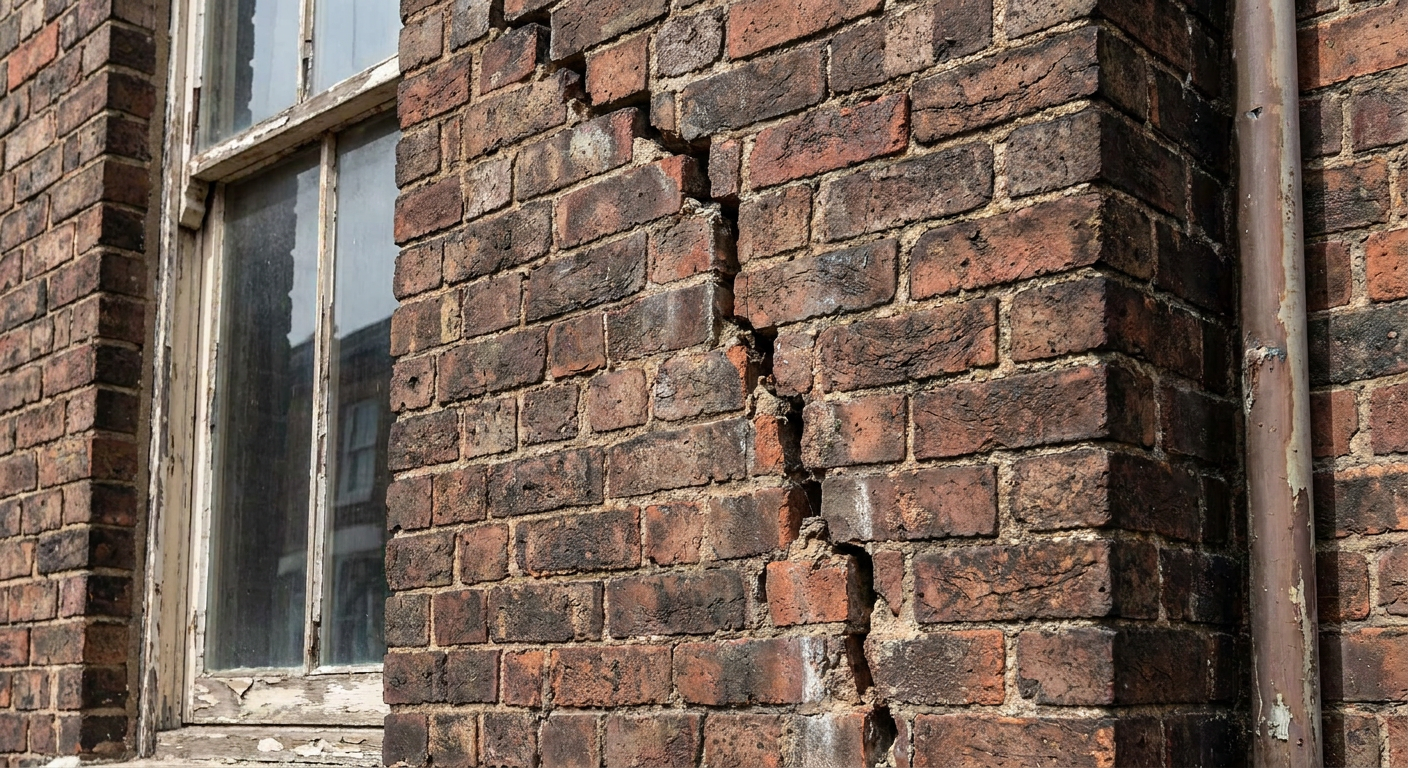
Movement in a let property
A tenant has reported new or widening cracks in your Leeds rental. You need to know whether it’s harmless settling or something that requires urgent attention, and what your responsibilities are as a landlord.
You’ve been told there’s movement in your rental
Tenants often notice cracks first, especially in older terraced or back-to-back houses common in areas like Armley, Beeston or Kirkstall. What they describe as “a big crack” could be seasonal plaster movement, or it could signal foundation issues that affect the building’s stability and your obligations under the tenancy.
Leeds’ mix of clay soils, mature trees and aging drainage means subsidence is not uncommon, particularly after dry summers or wet winters. As a landlord, you’re responsible for structural repairs, but you also need clear evidence before committing to costly work or approaching your buildings insurer.
What you receive after an inspection
The specialist provides clear, documented findings you can use with tenants, insurers or agents. This is not a generic checklist but a property-specific record of what was observed, measured and concluded.
Measured crack log
Every visible crack is recorded with width, direction and location. This helps distinguish harmless shrinkage from movement that aligns with foundation behaviour.
Photographic evidence
Time-stamped photos show the condition of walls, floors and external brickwork. These support any insurance notification or future comparison if movement continues.
Written assessment
You receive a plain-English summary of likely causes, whether further monitoring is advised, and if structural repair, such as underpinning or resin injection, is appropriate.
Insurance-ready report
If your buildings policy covers subsidence, the report includes details insurers typically request. You decide whether to submit it; the specialist does not contact them on your behalf.

Signs that may need investigation
Not every crack means subsidence, but some patterns in Leeds rentals warrant a closer look, especially where clay soils, tree roots or old drains are present.
Diagonal wall cracks
Cracks running diagonally near windows or doors, wider at one end, often reflect foundation movement rather than surface plaster drying.
Sticking doors or windows
Frames that jam consistently in the same position can indicate the structure has shifted out of true, particularly in end-of-terrace properties.
Cracks in external brickwork
Vertical or stepped cracks through mortar joints on outside walls suggest ground movement beneath, especially after prolonged dry spells.
Uneven floor slabs
Concrete floors that slope noticeably or have new fractures may point to soil shrinkage or washout underneath, common where drains leak near shallow footings.
How it works for landlords
You stay in control throughout.
Submit your enquiry
Send your details through the site. There is no charge for this, and your enquiry goes to one specialist covering your area in Leeds or its surrounding towns.
Arrange tenant access
The specialist contacts you to agree a visit date. You coordinate entry with your tenant or agent, as required under the tenancy agreement.
On-site inspection
The specialist surveys the property, checking internal and external signs of movement, drainage condition and nearby vegetation that could affect soil moisture.
Clear next steps
You receive a verbal summary on site and a written report shortly after. If repair is needed, options may include underpinning, resin injection or screw piling, depending on the cause and property type.
Questions we hear in Leeds
Do I need the tenant’s permission to arrange an inspection?
Yes, you or your agent must coordinate access with the tenant. The specialist will work around agreed times.
Will my buildings insurance cover this?
Many policies include subsidence, but check your wording. The specialist’s report gives you the evidence needed to submit a claim.
Can small cracks wait until the tenancy ends?
Not if they’re growing or linked to structural movement. Delaying assessment could worsen damage and affect your insurance position.
Are older terraced houses more at risk?
Yes, many Leeds back-to-backs and Victorian terraces sit on shallow foundations over reactive clay, making them vulnerable during prolonged dry spells.
The specialist contacts you directly to arrange access, discuss findings and outline options, no obligation to proceed.
What you have read here is general background on subsidence rather than guidance about your own building, and only an inspection can say what holds true at your address.
Get clarity on your rental
A specialist can inspect the property and give you a clear view of whether action is needed.