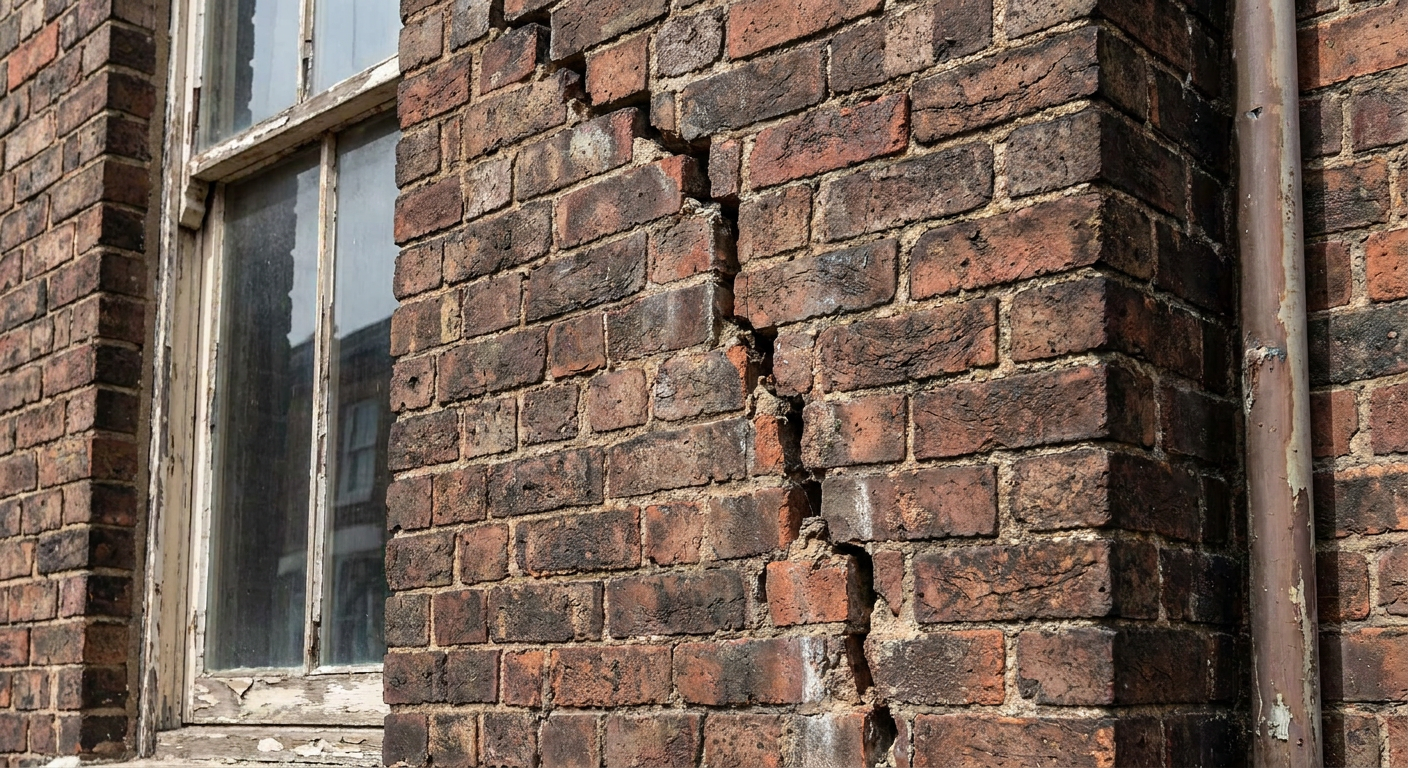
Cracked concrete floors, slabs and walls
Cracks in garage floors, ground-bearing slabs or rendered blockwork often look alarming but aren’t always signs of serious movement. In Leeds, where clay soils expand and shrink with seasonal moisture changes, some cracking reflects harmless settlement, while other patterns point to underlying ground instability that may need intervention.
What cracked concrete usually means
You’ve noticed a crack in your garage floor, an extension slab or a rendered wall, and it’s widening or accompanied by sticking doors. That doesn’t automatically mean your foundations are failing. Concrete shrinks as it cures, corroding reinforcement can cause surface spalling, and poor joints in older slabs lead to random cracking. But if the crack is diagonal, wider at one end, or aligned with movement elsewhere in the structure, it could signal ground movement beneath.
A specialist distinguishes between cosmetic damage and signs of active subsidence by checking crack width, direction, location and whether movement has stabilised. They also assess soil type, drainage, nearby trees and the age of the building, factors that matter across Leeds, from back-to-backs in Armley to newer builds in Alwoodley.
What you receive after an inspection
The specialist documents their findings clearly so you understand what’s happening beneath your property and what, if anything, needs doing.
Measured crack records
Every crack over 1mm is mapped, photographed and measured for width and direction. This baseline shows whether movement is ongoing or historic.
Cause assessment
The specialist identifies whether the cracking stems from shrinkage, corrosion, poor detailing, or actual ground movement linked to clay heave, leaking drains or tree roots.
Repair options explained
If intervention is needed, they outline realistic solutions: resin injection to stabilise soft spots, screw piling for deeper support, or underpinning only where absolutely necessary.
Insurance-ready report
You receive a written report you may choose to send to your buildings insurer. It details observed movement, likely causes and recommended actions without overstating the risk.

Signs that suggest ground movement
Not every crack matters, but these patterns often do. A specialist looks beyond the surface to see what the cracks reveal about what’s happening underneath.
Diagonal wall cracks
Cracks running diagonally across corners or near windows, especially if wider at the top or bottom, often reflect differential settlement of the foundation.
Sticking doors or windows
Frames that jam or won’t close properly can indicate the structure has shifted out of square due to uneven ground support.
Cracks through slab joints
When cracks cross control joints in garage or extension floors, it suggests the slab is moving as a whole, not just shrinking locally.
Visible step cracks
Where one side of a crack is noticeably higher than the other, the ground beneath may have settled unevenly, requiring investigation.
Recurring cracks after repair
If a patched crack reappears within months, the underlying movement hasn’t stopped, and the cause needs addressing, not just the symptom.
How it works from your side
You don’t pay us anything to start.
Submit your enquiry
You describe the cracking and location. We pass your details to one specialist covering your area, whether you’re in Pudsey, Seacroft or Boston Spa.
Specialist contacts you
They’ll call or email to discuss what you’ve seen, ask about the property’s age and any recent changes like new trees or drainage work.
Site visit arranged
If needed, they visit to inspect cracks, check levels, review drainage and assess soil conditions around your home.
Clear recommendations given
They explain whether the issue relates to subsidence, poor construction or normal ageing, and what, if anything, should be done next.
More on subsidence
What we do
Straight answers on subsidence
Can cracked concrete be repaired without underpinning?
Often, yes. If the slab isn’t tied to load-bearing walls, resin injection or localised screw piling may stabilise the area without full underpinning.
Does buildings insurance cover cracked floors?
Some policies cover cracking caused by subsidence, heave or landslip, but not shrinkage, poor workmanship or normal settling. Check your policy wording or ask your insurer.
How long does a concrete crack survey take?
A typical inspection lasts 60 to 90 minutes. The specialist examines internal and external cracks, checks levels, and may note nearby trees or drainage issues.
Will the cracks reappear after repair?
If the underlying cause, such as a leaking drain or unstable fill, is addressed, recurrence is unlikely. The specialist will explain what maintenance helps prevent future issues.
The specialist contacts you directly to arrange next steps based on what your property shows.
What you have read here is general background on subsidence rather than guidance about your own building, and only an inspection can say what holds true at your address.
Get clarity on your cracks
A specialist covering Leeds can inspect your property and explain whether the cracking needs action.